

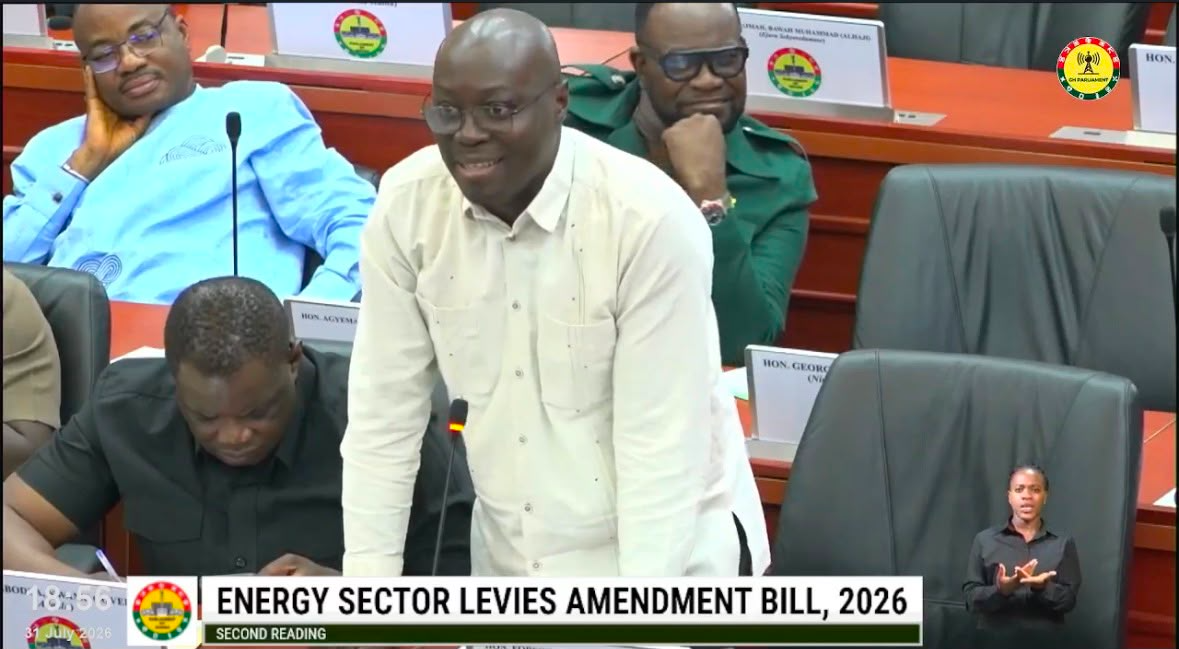
Parliament has approved the Energy Sector Levies (Amendment) Bill, 2026, introducing changes to the administration of fuel-related levies as part of government’s efforts to improve transparency, curb revenue leakages, and strengthen financing for the country’s energy sector.
The amendment revises the Energy Sector Levies Act, 2026 (Act 1135) by increasing the Energy Sector Shortfall and Debt Repayment Levy on fuel oil as well as the Road Fund Levy on fuel oil. It also replaces the existing upfront subsidy arrangement with an ex-post subsidy reimbursement system.
Presenting the Bill in Parliament on Friday, Finance Minister Dr. Cassiel Ato Forson dismissed suggestions that the amendment introduces a new tax, explaining that the levy already exists and that the reforms are intended solely to improve the administration of fuel subsidies.
According to the Finance Minister, under the new arrangement, eligible beneficiaries will first pay the applicable levy before applying for reimbursement, replacing the previous system where subsidies were provided in advance.
Dr. Ato Forson said the policy shift is aimed at eliminating long-standing abuses and closing loopholes that have resulted in significant revenue losses to the state.
He maintained that the amendment does not create any additional tax burden but rather strengthens accountability by ensuring that subsidy claims are properly verified before payments are made.
The Finance Minister noted that governments must continually review tax policies to address emerging challenges and prevent the exploitation of weaknesses within existing systems.
Drawing a comparison with reforms to the Free Senior High School programme, Dr. Ato Forson argued that reviewing a policy should not be mistaken for abandoning it, emphasizing that responsible governance requires periodic adjustments to improve efficiency and sustainability.
Government believes the amended law will enhance transparency in fuel subsidy administration, improve revenue mobilisation, reduce debt within the energy sector, and ensure that subsidy reimbursements are paid only to qualified beneficiaries.